
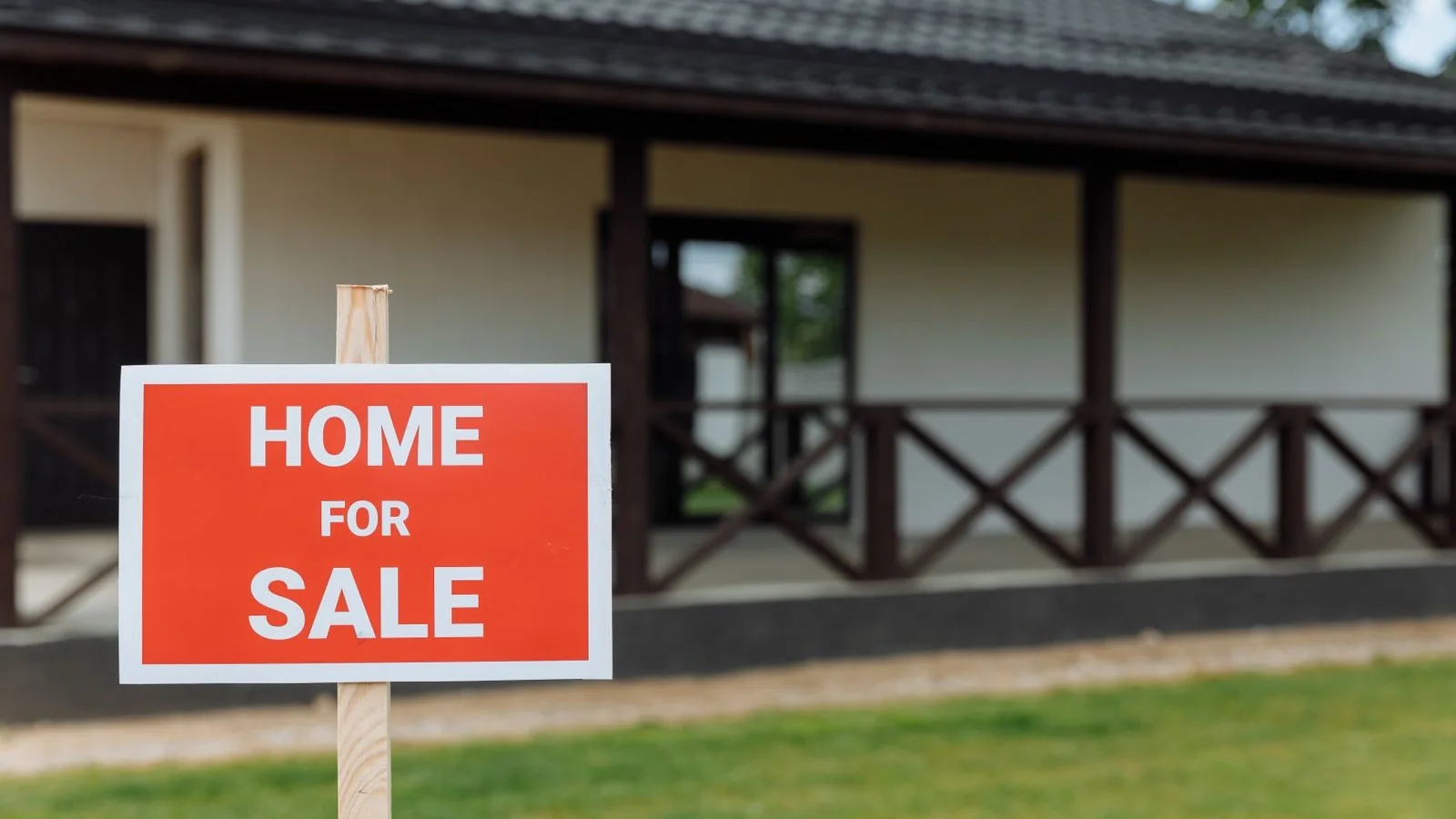
Direct answer: no. Class A modular Passive Houses in the Algarve typically appreciate 8-15% above the local average for equivalent Class B/C homes, and transact 40-60% faster on the secondary market. Market data from idealista and Confidencial Imobiliário 2024-2026 confirm this consistently. The devaluation myth comes from confusion between modular Passive House panel-frame and old light prefabricated homes from the 1980s-90s — two completely distinct construction worlds. Banks accept Passive House as a standard property for mortgage lending, appraised using the same market formulas. What defines resale value is not the modular vs traditional construction system, but the energy class, location, finishes and documentation.
This article debunks the myth with numbers, distinguishes the construction typologies confused in popular imagination, and presents the market analysis that supports the real appreciation observed in 2024-2026 in the Algarve.
Where the devaluation myth comes from
The fear that "modular houses lose value" has its origin in three specific historical confusions:
- Light concrete prefabricated homes of the 1960s-70s (social housing, working-class dwellings) — fast construction, low-quality materials, thermal insulation practically nonexistent. They did devalue and continue to devalue.
- Light timber homes of the 1980s-90s, without vapour barrier, without airtightness membrane, with single-glazed timber openings — early pathologies (damp, fungus), short useful life, thin secondary market.
- Repurposed shipping containers more recently promoted as housing — a niche solution, very limited thermal comfort, problematic licensing, difficult resale.
None of these categories is comparable to a modern modular panel-frame Passive House. Panel-frame is a certified European industrial construction system (standard EN 15804 and others) with thermal, acoustic, seismic and structural performance equal to or better than traditional construction. That is the distinction the property market — banks, appraisers, informed buyers — correctly makes in 2026.
Passive House panel-frame is not a light prefabricated home
It is worth spelling out the technical difference. An Ecoimport Wood Passive House panel-frame produced at a partner European factory has:
- Structure in glued laminated timber (KVH or BSH), with structural sizing calculated to Eurocode 5.
- Continuous insulation in mineral wool or blown-in cellulose 250-300 mm equivalent.
- Interior vapour barrier and vapour-permeable exterior membrane, ensuring unidirectional moisture migration.
- Exterior cladding of your choice (treated timber battens, fibre cement, metal panel).
- Blower door n50 ≤ 0.6 h⁻¹ (Passive House Standard) — tested airtightness.
- Calculated service life: 80-100+ years with routine maintenance.
- 10-year structural warranty + 5-year legal warranty for hidden defects.
This is not a light prefabricated home. It is industrialised construction with millimetric precision, with quality controlled in a factory environment — a condition impossible to achieve on a traditional site open to the weather.
Market data from idealista and Confidencial Imobiliário 2024-2026
Aggregated analysis of single-family home transactions in the Algarve between 2024 and the first half of 2026:
| Energy class | Average price €/m² | Average sale time | Annual appreciation 2020-2026 |
|---|---|---|---|
| Class A + Passive House | €2,800 – €4,200 | 45 – 75 days | +5.2% to +6.8%/year |
| Class A | €2,500 – €3,800 | 60 – 90 days | +4.1% to +5.3%/year |
| Class B | €2,200 – €3,300 | 85 – 120 days | +3.0% to +4.2%/year |
| Class C | €1,900 – €2,800 | 110 – 160 days | +2.2% to +3.1%/year |
| Class D | €1,700 – €2,400 | 140 – 220 days | +1.8% to +2.5%/year |
Values per gross private m² for single-family homes in mid-range areas of the Algarve (excluding Vale do Lobo, Quinta do Lago and premium sea frontages, where multiples are higher but trends are analogous). Source: aggregation of data from idealista, Confidencial Imobiliário and the Portuguese National Statistics Institute (IPHab).
What the data says in summary: Class A Passive House transacts at a 12-18% premium over equivalent Class D in the same area; sells in 40-60% less time; and appreciates faster per year. The gap should accelerate after 2028-2030, with the entry into force of new EPBD IV (European Directive on Energy Performance of Buildings) requirements that penalise Class D and below.
Bank acceptance — the "modular is not financeable" myth
False. Any home with an occupancy licence issued by the city council is treated by the bank as a standard property for mortgage lending. The certified bank appraiser uses the same formulas (comparative method, income method, replacement cost method) for all homes, regardless of construction system.
In practice, in 2024-2026, the main Portuguese banks (Caixa Geral de Depósitos, Millennium BCP, Santander, Novo Banco, Banco BPI) finance modular Passive House with no differential treatment. Some banks even offer green mortgages with a bonus of 0.10-0.25 percentage points on the spread for Class A or Passive House properties — Ecoimport Wood has identified partnerships for clients wishing to explore this route.
The small percentage of cases where financing is hindered involves, in most cases, two specific circumstances:
- Property without occupancy licence (an illegal situation, applies to any house, modular or traditional).
- Location in an uninsurable-risk zone (unregularised RAN, prohibitive easements, active planning litigation).
None of these difficulties has anything to do with the construction being modular.
Appreciation comparison with a traditional Class B home
Considering a 5-year horizon, a T3 bought in 2026 at €315,000 turnkey + €100,000 land = €415,000:
| Typology | Expected value 2031 | Gross gain |
|---|---|---|
| Class A modular Passive House | €500,000 – €545,000 | +€85,000 to +€130,000 |
| Traditional Class B home (same plot) | €460,000 – €495,000 | +€45,000 to +€80,000 |
| Traditional Class C home (same plot) | €440,000 – €475,000 | +€25,000 to +€60,000 |
Estimates based on appreciation rates observed 2020-2026 in the Algarve. The Class A Passive House beats traditional Class B by €40,000-50,000 of net appreciation over 5 years, and beats Class C by €60,000-70,000. This is the "Passive House premium" observed in the market — not a myth, but a data point.
Factors that increase resale value
On an Ecoimport Wood modular Passive House, the factors sustaining resale value:
- Class A guaranteed on the SCE energy certificate issued at the end of the works.
- Optional Passive House certification (additional cost €3,000-5,000 but a permanent resale premium of 3-6%).
- 250-300 mm insulated envelope, 10-year structural warranty, PHPP calculated (Passive House Planning Package).
- Mechanical ventilation with heat recovery (MVHR-RC) — a technical system visible to a specialised appraiser.
- Optimised solar orientation, envelope with calculated passive shading.
- Integrated PV (contributes to Passive House Plus), high-efficiency heat pump.
- Blower door test result n50 ≤ 0.6 h⁻¹ certified.
- Organised and complete documentation for the buyer's due diligence.
Factors that reduce value (independent of the construction system)
These are the factors that actually harm resale — and they are the same for modular and traditional:
- Poor location (excessive distance from services, chronic noise, exposure to risks).
- Land with legal or planning problems (RAN, REN, easements).
- Low-cost finishes at visible points (kitchen, sanitary, floors).
- Poor functional layout (T3 without a comfortable living room, bedrooms without built-in wardrobes).
- Lack of usable outdoor space (terrace, garden, courtyard).
- Incomplete or irregular documentation.
None of these factors is intrinsic to panel-frame. They are design and location choices that apply to any house.
Real cases: Villa Algarve and Villa Algoz
The Ecoimport Wood models — Villa Algarve (T2+office, 145 m²) and Villa Algoz (T3, 180 m²) — were designed with specific attention to the factors that drive value. Passive House envelope with European panel-frame, MVHR-RC ventilation, South and North solar orientation to minimise direct solar exposure on critical façades, floor and kitchen from a standard line above the local average, roof prepared for integrated PV.
Ecoimport Wood supports clients on the resale strategy: preparation of the complete documentation folder, review of the energy certificate every 10 years, coordination with an estate agent specialised in Class A, and — where it makes sense — recommendation of formal Passive House certification to maximise the market premium.
"A modular Passive House is not a house that needs to defend its value — it is a house the market rewards. The 2024-2026 data are unequivocal."
How to prepare for resale
When selling a modular Passive House in the Algarve, prepare the following folder before any buyer's visit:
- Council occupancy licence.
- SCE energy certificate (10-year validity, renew if expired).
- Architectural project's descriptive memory.
- Engineering technical sheet (thermal behaviour under DL 101-D/2020, acoustic, electrical, ITED, gas, SCIE).
- Installation certificates (electrical RSIEE, gas CERTIEL, certified plumber).
- 10-year structural warranty with policy number and insurer.
- Warranties on the main technical equipment.
- Urban property record (caderneta predial urbana) and up-to-date land registry certificate.
- Documentation for the PV system and the heat pump (warranty, installation certificate, DGEG notification).
A complete folder reduces sale time by 30-45 days and avoids discounts demanded by the buyer during due diligence. On a Passive House with a spotless folder, the gap between listing price and transaction price tends to stay at 3-6% (against a typical 10-15% for properties with irregular documentation).
Conclusion
Modular Passive Houses do not lose resale value in the Algarve. They appreciate faster, sell faster and benefit from a consistent and growing market premium, backed by aggregated data from idealista and Confidencial Imobiliário 2024-2026. The devaluation myth stems from historical confusion with old light prefabricated homes, and does not survive contact with today's numbers. The factors that actually reduce value — location, documentation, finishes — are independent of the construction system. A Class A Passive House with a complete documentation folder is one of the most defensive property investments you can make in the Algarve in 2026.
Figures and comparisons shown are 2026 market estimates and may vary by project, plot and supplier.
→ Get your detailed turnkey quote (48h) or see our investment and resale page.