
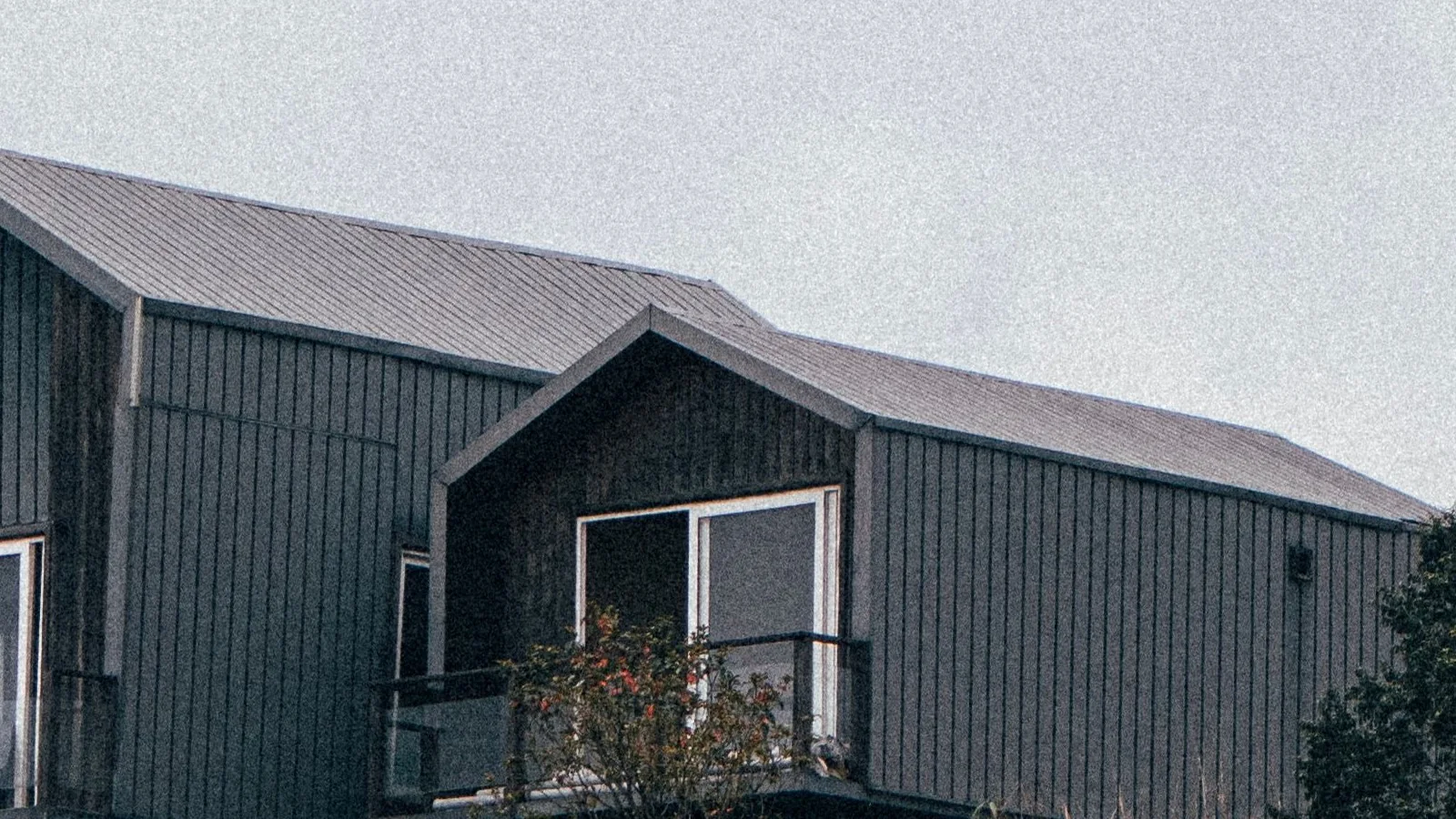
Direct answer: in Portugal, a turnkey prefab house costs between €30,000 (basic kit 25-40 m²) and €500,000 (Passive House Class A 250 m²), depending on the type (self-assembly kit, panel-frame Passive House, container, tiny house) and on what is actually included (licensing, land, connections, finishes, certifications). This guide shows realistic prices per tier, what separates a low-cost kit from a modular Passive House, and how to avoid marketing offers that hide 20-30% of extra costs.
The Portuguese prefab market grew in recent years driven by two forces: rising demand from the diaspora (Switzerland, France, Germany, Belgium, Luxembourg) building second homes or preparing to return, and expats entering via NHR (non-habitual resident tax regime) / IFICI (Tax Incentive for Scientific Research and Innovation) in the Algarve, Silver Coast and interior. The industry response has fragmented into five typologies with very different prices — and a single commercial term, "turnkey", that means different things in each.
In this article we detail five price tiers with up-to-date data (INE — Portuguese national statistics, ADENE — national energy agency, idealista, Confidencial Imobiliário), what each tier includes as standard, the full legal framework (RJUE — building regime, PDM — municipal master plan, SCE — energy certification system, art. 1225 CC — Portuguese Civil Code), the comparison with traditional construction and a 10-point checklist before signing a contract.
What "turnkey" means in a prefab house
In Portugal, the expression "turnkey" has no exclusive legal definition in the Civil Code — it arises from contractual practice and art. 1225 CC (works contract). In the prefab market, three very different realities are sold under the same label:
- Basic prefab — components built at the factory (walls, roof, joinery) and assembled on-site. The client or contractor handles licensing, foundations and finishes.
- Modular — a system of complete modules delivered to the plot, with services embedded as standard. More expensive than a kit but faster to assemble.
- Panel-frame Passive House — a premium subcategory of modular with a Passive House thermal envelope (250-300 mm continuous insulation), MVHR-RC and Class A guaranteed.
All three can be sold as "turnkey", but only the last delivers a house that is actually ready to live in (occupancy licence issued, energy certificate, meters active). If you want a detailed comparison between prefab and modular, see our prefab vs modular guide; if you want to understand item by item what a real turnkey contract includes, read what a turnkey contract includes.
Realistic prefab house prices in Portugal (5 tiers)
Unlike guides that reduce the market to three bands (low/mid/premium), the Portuguese reality has five distinct tiers with very different construction systems, timelines and risk levels:
| Tier | Total price | Price/m² | Typology | Energy class | Notes |
|---|---|---|---|---|---|
| 1. Low-cost self-assembly kit | €30,000-60,000 | €800-1,200/m² | T0/T1 25-50 m² | C or D | Client assembles or hires tradespeople. No licensing included. |
| 2. Basic prefab with assembly | €60,000-120,000 | €1,100-1,500/m² | T2 60-90 m² | B to C | Manufacturer assembles. Licensing optional (extra). Standard-line finishes. |
| 3. Modular panel-frame Class B | €120,000-220,000 | €1,400-1,800/m² | T2/T3 90-140 m² | A or B | Panels produced at a European factory. Services embedded. Licensing and certification included. |
| 4. Modular Passive House Class A guaranteed | €220,000-450,000 | €1,750/m² VAT included | T3/T4 130-250 m² | A guaranteed by contract | Ecoimport Wood — Passive House envelope, MVHR-RC, solar panels, fitted kitchen, occupancy licence, 10-year structural warranty. |
| 5. Bespoke premium modular | €400,000-800,000+ | €2,500-3,500/m²+ | Custom villa 200-400 m² | A+ | Architect design, ultra-premium finishes, home automation, pool, landscaping. |
Critical note: tiers 1 and 2 marketed at €800-1,500/m² generally do not include licensing, council fees, foundations, utility connections, fitted kitchen or energy certification. The real total cost ends up 25-40% above the advertised price — a common trap in online offers. For a specific analysis of tiers 3-4 in the Algarve, see our turnkey price breakdown for the Algarve.
What is actually included in the price (objective checklist by tier)
Transparency over what is — and is not — included in the advertised price is the main factor that separates a good contract from a marketing trap. Objective analysis by tier:
Tier 1-2: kit and basic prefab
- Structure (walls, roof, joinery) — included
- Basic-line finishes (standard flooring, paint) — included
- Architectural design and specialities — extra (5-8% of value)
- Licensing at the municipal council — extra
- Foundations — extra (10-15%)
- Utility connections (water, electricity, drainage) — extra
- Fitted kitchen — extra
- Complete bathrooms — extra
- Energy certificate — extra
Tier 3: modular panel-frame Class B
- Structure + insulated envelope (150-200 mm) — included
- Embedded services (electrics, water, ITED — telecoms infrastructure) — included
- Design and licensing — included
- Standard-line finishes — included
- Class B energy certification — included
- Basic-line fitted kitchen — usually included (verify)
- Solar thermal panels — extra or prepared
Tier 4: modular Passive House Class A guaranteed
- Design, licensing and council fees — included
- Full foundations — included
- Passive House envelope 250-300 mm — included
- MVHR-RC ventilation (heat recovery ≥85%) — included
- High-performance frames (triple low-emissivity glazing) — included
- Fitted kitchen, bathrooms, flooring, paintwork — included
- Solar thermal panels + heat pump preparation — included
- Occupancy licence + Class A energy certificate guaranteed — included
- 10-year structural warranty + 2-year finishes warranty — included
Always excluded: land, pool, landscaped garden, furniture and advanced home automation. These items are quoted separately before signing the final contract — full transparency, no surprises on the final invoice.
8 factors that make the final price vary
- Typology and usable area — a 60 m² T1 has a higher cost per m² than a 140 m² T3 (scale effect). T4/T5 are penalised by added complexity (second storey, more rooms).
- Construction system — self-assembly timber kit, panel-frame Class B or Passive House Class A panel each drive cost, timeline and energy performance.
- Finish level — standard flooring vs premium (solid hardwood) flooring, standard-line kitchen vs architect brand, white-line bathrooms vs designer. The difference can reach €300/m².
- Location and plot — flat vs sloping (special foundations), interior vs coast (different council fees and IMT — property transfer tax), site access.
- Distance to site — transporting panels from a European factory (Austria, Germany, Portugal) or nationally. In the Algarve, European transport adds 3-5% to the total.
- Certifications required — international Passive House Institute (PHI) vs SCE only (Class A ADENE). The PHI certificate is stricter and adds 4-6% but secures comfort and resale value.
- Technical specialities included — MVHR-RC, ITED (telecoms), gas, SCIE (fire safety), solar panels. All mandatory in new residential builds.
- Real turnkey regime — fixed price with VAT included and delay penalties, vs "price + VAT + extras" in many marketing offers.
Prefab vs. traditional construction (updated comparison)
The comparison between prefab and traditional brick construction depends on which prefab tier you choose. The table below contrasts three realities — basic prefab, modular Passive House and traditional construction — on objective criteria:
| Criterion | Basic prefab | Modular Passive House | Traditional construction |
|---|---|---|---|
| Price/m² VAT included | €1,100-1,500 | €1,750 (fixed) | €1,850-2,500 (with overruns) |
| Total timeline | 8-14 months | 6-9 months | 14-24 months |
| Typical energy class | B-C | A guaranteed | B (varies) |
| Annual consumption T3 | €1,500-2,200/year | €400-800/year | €1,800-2,500/year |
| Structural warranty | 5-10 years | 10 years contractual | 5 years statutory |
| Bank financing | Accepted | Easily accepted | Accepted |
| Resale appreciation | Average | 8-15% above average | Average |
Sources: idealista Data recent years for prices and timelines; ADENE for energy class; Confidencial Imobiliário for resale data; INE for the construction cost index. For a specific comparison between Class A and certified Passive House, see our Class A vs Passive House guide.
Advantages and disadvantages of buying prefab in Portugal
Advantages (7 points):
- Much shorter timeline than traditional works — 6-14 months against 14-24 months.
- Fixed price with a real turnkey contract (in tiers 3-4).
- Superior energy efficiency — Passive House guarantees Class A by contract.
- Less on-site waste — parts cut at the factory with millimetric dimensional control.
- Bank financing eased by the fixed price (less risk for the bank).
- Better cost predictability — a household budget you can plan against.
- Lower risk of overruns — in tier 4 the price does not change between the CPCV (promissory purchase-and-sale contract) and the deed.
Disadvantages and risks (5 factual points):
- Low-cost kits (tiers 1-2) hide 25-40% of additional costs — read the detailed annex before signing.
- Not every company delivers a "real turnkey" — many offers exclude licensing, VAT, utility connections.
- Rustic land without urban viability may make the project impossible — mandatory to request a PIP (prior information request) from the council before signing the land deed.
- The "per m²" price may not include VAT, licensing or land — always compare the total amount paid.
- Not every prefab is Passive House or Class A — if you value resale and efficiency, check contractually.
Prefab vs modular Passive House: when to choose which?
A practical decision framework based on budget and priorities:
- Basic prefab (tiers 1-2) makes sense if: tight budget below €100,000, small typology (T0/T1), client accepts managing licensing themselves and does not value Class A energy efficiency.
- Modular Passive House Class A (tier 4) makes sense if: budget above €220,000, values stable thermal comfort, wants Class A by contract, plans to keep the house mid- to long-term and factors resale appreciation into the decision.
If the decision also involves comparing a self-assembly kit vs professional turnkey, see the kit vs turnkey guide. If you want to assess whether a modular prefab loses value on resale, consult the market-data analysis in does a modular house lose value?.
Legalisation, licensing and certification in Portugal
Whatever the tier, any prefab house in Portugal is subject to the same legal framework as traditional construction. The five essential statutes:
- RJUE — Legal Regime for Urbanisation and Building (Decree-Law 555/99, revised by DL 10/2024) — applies to all construction, prefab included. Defines the regime for licences, prior communications and occupancy authorisations.
- PDM — Municipal Master Plan — each council sets its own rules on minimum area, building height (cércea), setbacks from boundaries, maximum built area and permitted uses. Consulting the PDM before signing the land deed is mandatory.
- SCE — Energy Certification System (Decree-Law 101-D/2020) — energy certificate issued by ADENE is mandatory before the occupancy licence. Sets classes A+ to F and minimum requirements.
- Art. 1225 of the Civil Code — 5-year statutory warranty for hidden structural defects on works contracts. Basis for subsequent claims.
- SCIE (fire safety) and ITED (telecoms) — mandatory in new residential builds, certified by a licensed technician.
In addition, DL 101-D/2020 makes solar thermal panels mandatory for domestic hot water (AQS — águas quentes sanitárias) — or an equivalent renewable source, such as a heat pump powered by photovoltaics. For the step-by-step licensing detail, see the modular house licensing guide.
10-point checklist before buying a prefab in Portugal
- Confirm in writing that the advertised price includes VAT (23% on mainland Portugal).
- Ask for a model contract with a detailed line-item annex — brands and models for windows, kitchen, bathrooms, ventilation.
- Check that licensing at the municipal council is included, including council fees and urban charges.
- Confirm a binding timeline with a daily penalty for delays attributable to the contractor.
- Ask for the installer's certification (Passive House Institute, where applicable) and references for the last 3-5 handed-over projects.
- Verify the plot's urban viability through the PDM and, if possible, a prior information request (PIP) to the council.
- Confirm that Class A is guaranteed by contract — not "expected" or "estimated".
- Check real structural warranty: 5-10 years + free technical support in the first months.
- Ask to visit a project under way or handed over in the current year — an in-person inspection beats renders.
- Compare at least 3 formal quotes (with detailed annexes) before deciding.
Buying prefab in Portugal from Switzerland, France, Germany and Belgium
The Portuguese diaspora in central Europe (Switzerland, France, Germany, Belgium, Luxembourg) and expats from northern Europe together account for around 40% of the quote requests received. The remote process is now simple and regulated:
- Portuguese NIF (tax number) mandatory — obtained in 24-48h via the consulate, a lawyer or a tax representative resident in Portugal (typical cost €100-150).
- Legal power of attorney — lets you manage the whole process (CPCV, deed, licensing) remotely through a local lawyer. Notarised at the Portuguese consulate in your country of residence.
- Portuguese bank account — opened remotely with banks such as ActivoBank or Millennium bcp using NIF and proof of address.
- Financing — Portuguese banks accept non-residents with mortgage collateral, typical LTV of 70% (versus 80-90% for residents) and a debt-service ratio up to 35%.
- Logistical advantage — for the diaspora in Austria, Germany and Belgium, shipping Passive House panels from a partner European factory is geographically efficient, with optimised transport cost.
- IFICI regime (formerly NHR) — new residents in qualified professions benefit from 20% taxation on employment income for 10 years. Details in modular houses for foreigners in the Algarve.
For financing, the fixed price of tiers 3-4 is a decisive advantage — banks approve faster because the risk of overrun sits with the contractor. See the turnkey modular house financing guide.
How to request a bespoke quote in Portugal in 48h
Three practical ways to request a base proposal with a response within 48 hours:
- Online form — complete the form at our quote form indicating typology (T2, T3, T4), plot (even approximate) and indicative budget. Email response in 48h.
- Direct WhatsApp — message 964 533 140. Service in PT, EN, ES and DE, weekdays 09:00 to 19:00.
- In-person meeting or video call — meeting in the Algarve for a technical site assessment, or a 30-minute video call for international clients.
Useful documents for a detailed quote (optional at initial stage): urban property record (caderneta predial urbana), 1:2000 location plan, intended typology and usable area. To see two reference models with realistic pricing, consult the Villa Algarve (T2 + office, 145 m²) and the Villa Algoz (T3, 180 m²). The full step-by-step process is set out in process.
Figures based on current projects and market data (ADENE, INE, idealista, Confidencial Imobiliário). Each house is quoted individually according to location, plot, typology and chosen finish level.
→ Request your turnkey quote in 48h or consult the detailed comparison in the complete Algarve turnkey house guide.